
Women’s Health Programs Expand at Special Olympics Canada National Games
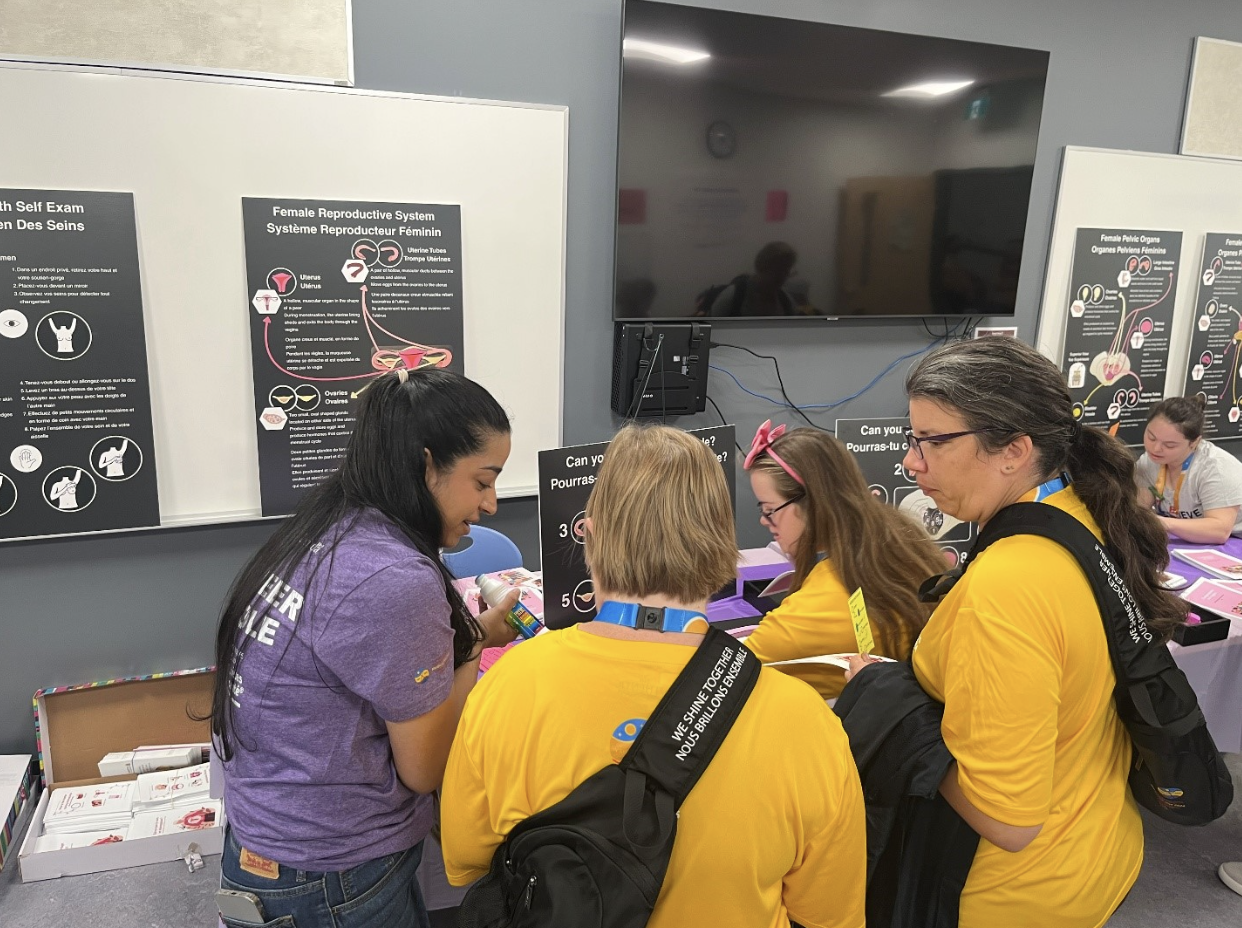
“It’s wonderful to see my vision of what the event would be come to life!” Said University of Calgary [U of C] researcher Laura St. John, while volunteering at Special Olympics Canada’s new woman-focused Healthy Athletes program.
The Women’s Health screenings, which started at the Special Olympics Nova Scotia Provincial Games with custom bra-fittings, were expanded in Medicine Hat to include gynecological and bone health education, with a focus on menstruation, menopause and breast health. During the screenings—held in a small yet smartly utilized room within Medicine Hat College, who generously provided their facilities—volunteers greeted Special Olympics athletes from all across Canada.
These volunteers took athletes through various tables, hands-on exhibits and inclusive guides designed to give potentially life-saving medical advice to a community of people who frequently lack access to such important information. In the corner of this room, was a series of high-quality bras, which are provided with custom fitting to any athlete who needs them. Working diligently at the front entrance of this room—and looking proudly at her equally dedicated colleagues—was Laura St. John, beaming at the fruits of her labour.
With a PhD in exercise science, Laura’s career took a defining turn after she started looking for academic articles about the needs of women with intellectual and developmental disabilities (IDD) after. Specifically, she found there were no studies about how IDDs affect women’s health.
Volunteering at the Special Olympics Canada Winter Games Calgary 2024, Laura met a like-minded individual named Rachel Skanes who agreed to partner with her in leading research about the intersectional healthcare needs of women with intellectual and developmental disabilities. Rachel—who works for Special Olympics Nova Scotia—helped develop a ground-breaking program in her province that gave female athletes with IDDs custom-fitted bras to improve their performance, and physical health.
This bra fitting program came out of a larger study held in 2023 looking into the unique healthcare needs of women with intellectual and developmental disabilities.
“We saw gaps in knowledge of period health and hygiene practices,” Laura said, adding, “we chose the topics we focus on [in the Healthy Athletes programs] based on that first study. This is how we’re filling the knowledge gaps.”
These studies are still ongoing, which is why Alli Brieanna—one of Laura’s fellow U of C researchers—stationed herself just outside the Women’s Health area, taking optional surveys from athletes coming out of the event. Breasts, vaginal health, and personal hygiene are all very sensitive topics, which Alli said contributes to the lack of education that women with intellectual disabilities are given about their own bodies.
Alli said many people with IDDs do not have the ability to advocate for their own needs, and that many healthcare practitioners are not given enough training about how to appropriately treat members of this community. Related to this, Alli said she has met athletes who might not have a healthy understanding of informed consent. In order to allow athletes with IDDs to ask the questions they need—without feeling pressured into anything—she said the Women’s Health program focuses on making a calm, open-minded environment.
“We’re separate from the rest of their world,” Alli said, “we don’t have any impact on their social lives in that respect. When asking about people about their menstrual health, we make it clear there’s no judgment and they don’t have to answer anything they’re not comfortable with.”
Because athletes “know they can say no”, they tend to ask the volunteer clinicians and researchers about the intimate workings of their bodies. Alli said she can tell many of the athletes “have a burning question” that they finally feel comfortable letting out during the Women’s Health event.
“It’s always wonderful to come and see and talk to athletes,” Laura said, with a big grin on her face as she looked at the large group of athletes entering the bustling clinic, “sometimes we don’t get that opportunity when we do research and I get stuck in my office.
“People don’t like those uncomfortable conversations,” she explained, “and if they’re not open to being comfortable, it makes it harder to ask questions.