
Meet Sophya, a Special Smiles volunteer
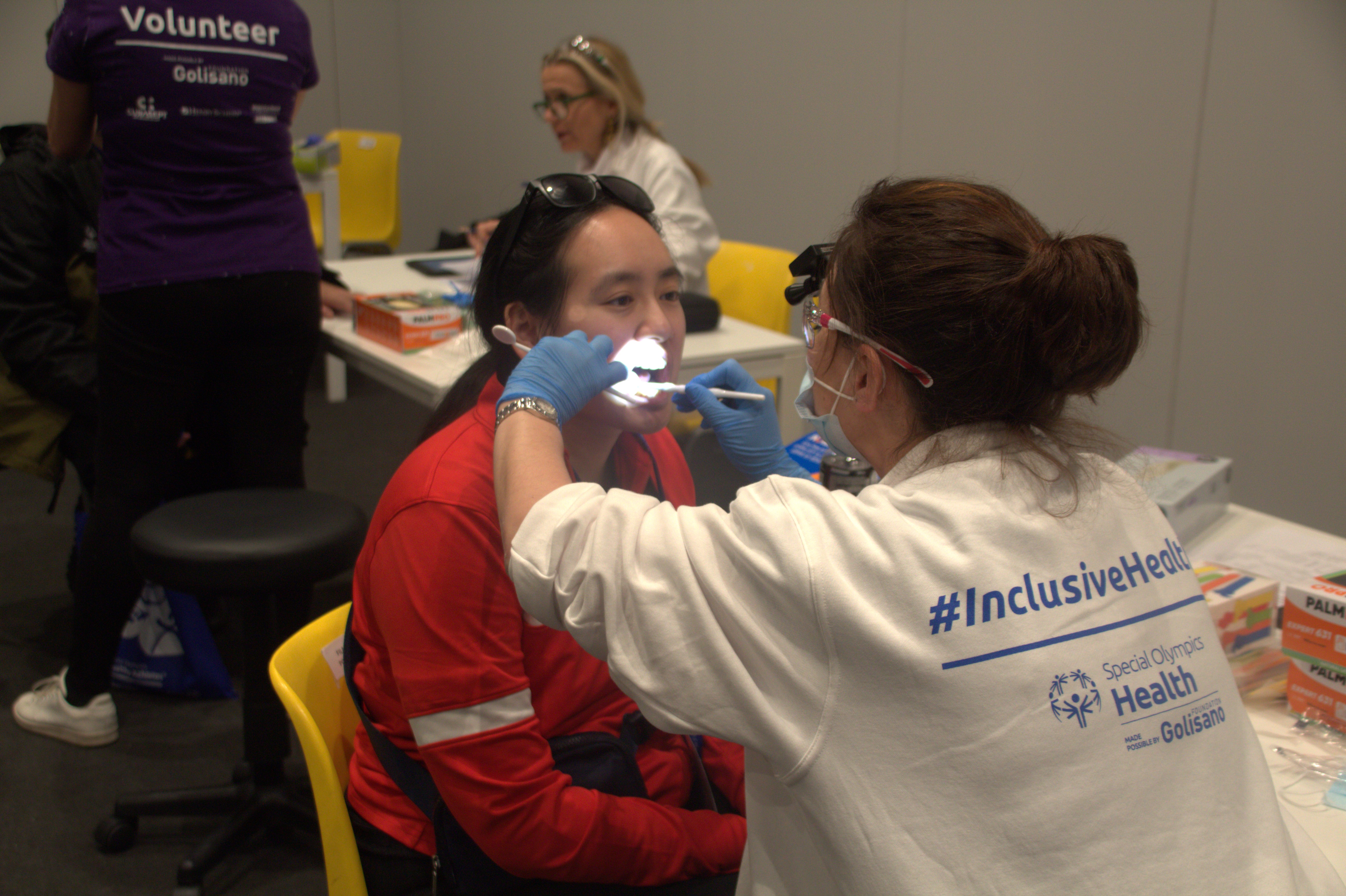
Sophya Sidhu is not only a dental assistant who volunteers her services to Healthy Athletes screenings, she is also a long-time coach in Special Olympics Ontario!
Her career choices were made in no small part because of Special Olympics, and a strong desire to help people with Intellectual and Developmental Disabilities (IDD). When stepping into the role of a Health and Wellness Coordinator in London, Sophya surveyed local Special Olympics Ontario athletes by asking them what they felt their biggest health issues were. To her surprise, the results found that Special Olympics athletes considered oral health to be their biggest medical concern, followed by mental health, and then nutrition.
Then I stumbled across Healthy Athletes, it had all the aspects of health even I could think of. I emailed Brock [the Healthy Athletes coordinator at Special Olympics Ontario] asking what I could do in relation to oral health, and he said Special Smiles.
Certain dental conditions are more common in people with IDD. Sophya gave the example of a patient she has never seen speak, meaning their mouth is kept shut through most of the day, leading to an increase in bacteria. On the flip side, she also said that mouth breathing—which is mostly breathing through a person’s mouth instead of their nose—can lead to mouth dryness, which is also an infection risk and is quite common among people with IDD.
Sophya further added that some people are not able to change certain habits that lead to increased infection; not everyone has the option of mostly breathing through their nose even if it is healthier. In other cases, Sophya finds that a person’s tongue can make treatment challenging, particularly in patients with Down Syndrome or Cerebral Palsy. While patients are normally asked to keep still to avoid getting themselves hurt during a procedure, not everyone has the ability to stop small movements even if they really want to. She also said that dental professionals must learn how to treat people who require different accommodations than what they are used to.
Sometimes the disability itself can be intimidating. You might have a patient with a really big underbite, that can make things challenging. Or a patient in a wheelchair too, now you have to maneuver your ergonomics. In the end, technically everyone has a special need or accommodation - it starts with communication, follows with adaptation, and ends with accommodation. You have now serviced a person with putting them, as an individual, as a priority.
With that said, Sophya believes the biggest obstacle in providing good dental care to people with IDD is communication and understanding. She works with the Canadian Society for Disability and Oral Health to alleviate such barriers and advocate for all individuals, regardless of disability.
Sophya currently works at the Middlesex London Public Health Unit, where she says she sees a variety of patients from many different backgrounds. She also is a professor at Fanshawe College, where she educates her students about equity, diversity, inclusion, and multiculturalism in healthcare. Sophya has a lot of gratitude for Special Olympics and pursues her career in Oral Health as a dedication to give back to her athletes that have made such a long-lasting impact.