
Celebrate Two Female Leaders at Special Olympics Canada
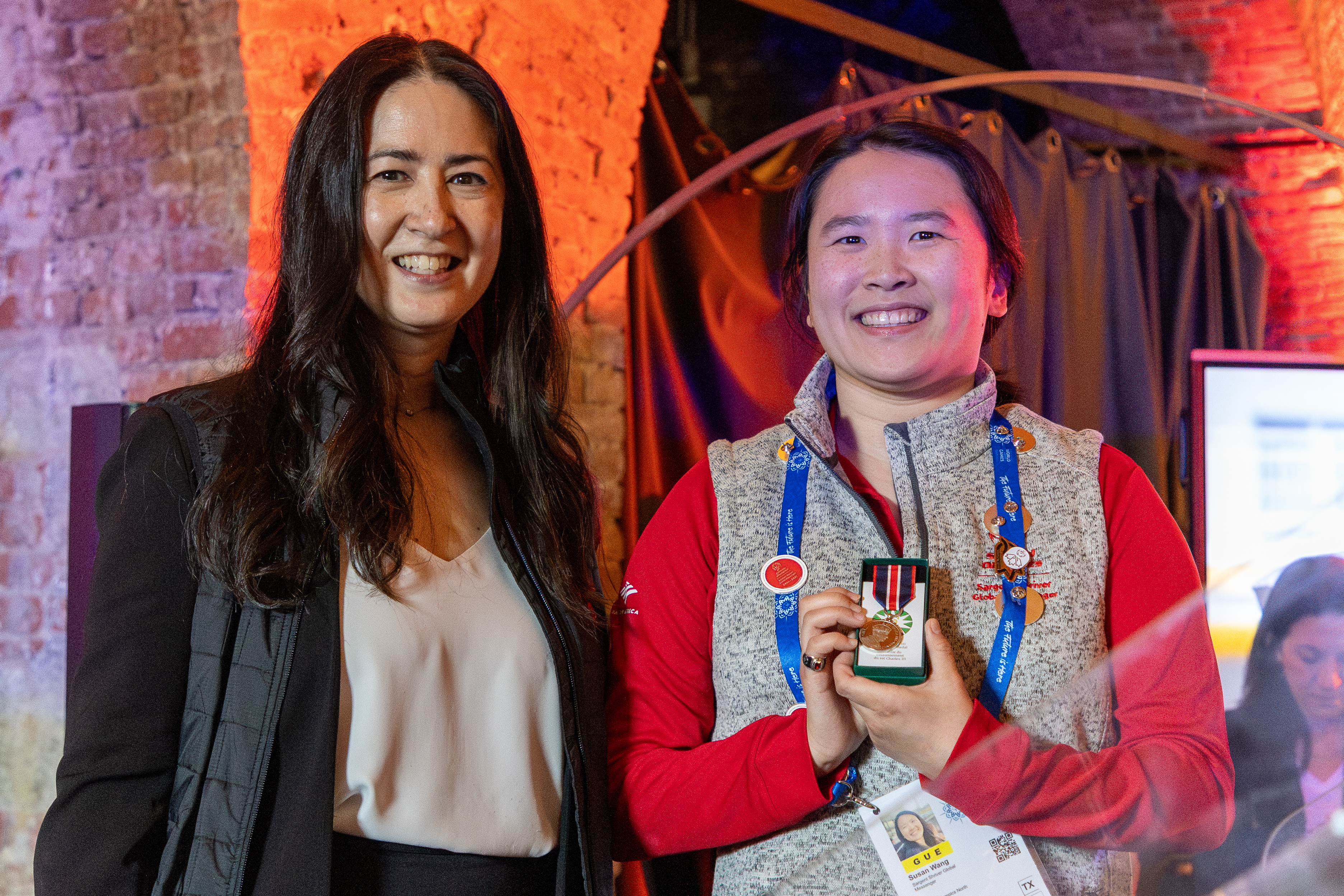
An inclusive and diverse organization, the Special Olympics movement would have gone nowhere without the contribution of countless women. Even the organization’s founder—Eunice Kennedy Shriver—is a woman, along with many of our athletes, coaches, volunteers, and staff members.
Special Olympics Canada is celebrating two of our most influential leaders: Susan Wang and Gail Hamamoto.
One of only ten Sergeant Shriver Global Messengers in the entire world, Susan represents not just Canada, but all of Special Olympics North America (SONA) as an Athlete Leader. Using her elite position, Susan promotes a more inclusive world through public speaking at the local, national, and international levels.
“It was a lot of about hard work and determination,” said Susan, adding that that the SO British Columbia chapter helped her through the application process of becoming a Sergeant Shriver Global Messenger.
“[Susan] is an absolute force,” said Gail Hamamoto, CEO of Special Olympics Canada, “she is passionate, well spoken, very open and shares her experiences in a way that draws you in.”
Having recently celebrated her two-year anniversary as CEO, Gail said Special Olympics Canada is moving towards having more opportunities for women to play sports. At the 2023 World Games in Berlin, the Women’s Team for soccer won a bronze medal, and the Women’s Basketball Team got silver.
I think that Games are a huge catalyst for growth when you include something like a women’s soccer division.
Gail believes having the opportunity to compete in such a large competition motivates girls to join a team, while also giving chapters and volunteers around the world a compelling reason to create teams for female athletes in the first place. Driving new interest and resources towards women playing in Special Olympics is important, because even in an organization dedicated towards inclusion, many sports tend to have a lot more male athletes than females.
As an alpine skier, track athlete, and former floor hockey player, Susan had experienced being one of two girls on a floor hockey team with 12 athletes.
I remember being the only girl playing at a floor hockey practice and the guys got so aggressive.
Outside Special Olympics, Susan works part time in the field of child care, working with individual families to take care of their children, and also working as a support worker for children with special needs at a childcare centre.
Susan said the confidence she gained as an Athlete Leader in Special Olympics helps during her day job, especially when it comes to speaking with children and other educators. Also, given that she tends to pick up babies a lot, Susan appreciates getting physically strong from playing sports.
“We change a lot of diapers,” she chuckled.
When it comes to the main purpose of Special Olympics, Gail said she considers sports to be the “vehicle” used to change lives, better society, and move Canada towards a more inclusive future.
“It grabbed my heart,” said Gail, “[disability sports] has been not only my work that I do, but the majority of my volunteer roles; I’ve literally dragged my son around the planet as a part of it. It’s become a life, not a job.”
Gail recalled a time when she was in a New Zealand hotel with her son, eating lunch alongside athletes with physical disabilities. Given her son was only three years old at the time, Gail felt like that experience was a good example of how he grew up accepting people with disabilities as a normal part of life.
“He’d been running around, obviously, and he came up to me and said, ‘Mommy, some people don’t have any arms.’” She chuckled, adding, “and then he went back to doing his thing. It was no big deal for him, that was just the reality.”
Both Susan and Gail offered their advice on how to be a female leader, even when in spaces that are not accommodating towards women, or even have open prejudice. At the start of her career around 20 years ago, Gail was not only in the minority due to being a woman in leadership, she was also one of the only voices advocating for disability sports at the time. Due to this, Gail described her early self as “steely”, not allowing herself to be vulnerable while she was insisting upon equity, inclusion, and accommodation in a time when those words often had no meaning.
Now, however, Gail prides herself on being able to show vulnerability as CEO, and feels like embracing the most of her personality—rather than hiding some parts of it away—makes her a better leader.
Don’t be afraid to lead with compassion, empathy, vulnerability. At the same time, don’t be afraid to be strong, to be loud in the room, and create space to lead. I think you can be all of those things.
Gail also highlighted the importance of building a network of mentors, saying she was helped by several kind, experienced people who guided her through her early career.
While Gail had to fight apathy towards a group of people she cared about at the beginning of her career, Susan faced direct prejudice against herself. As she has told Special Olympics in a previous biographical interview, Susan is a Chinese-Canadian woman who fluently speaks English with an accent, which people used to bully her for. Still, she did not let the judgements of others take away confidence in herself, and encourages others to do the same.
I would say to not let anyone get to you, do your best. Even if it may be hard at first, just keep going. No matter what people say, keep going. Do the best and that’s all that matters.