
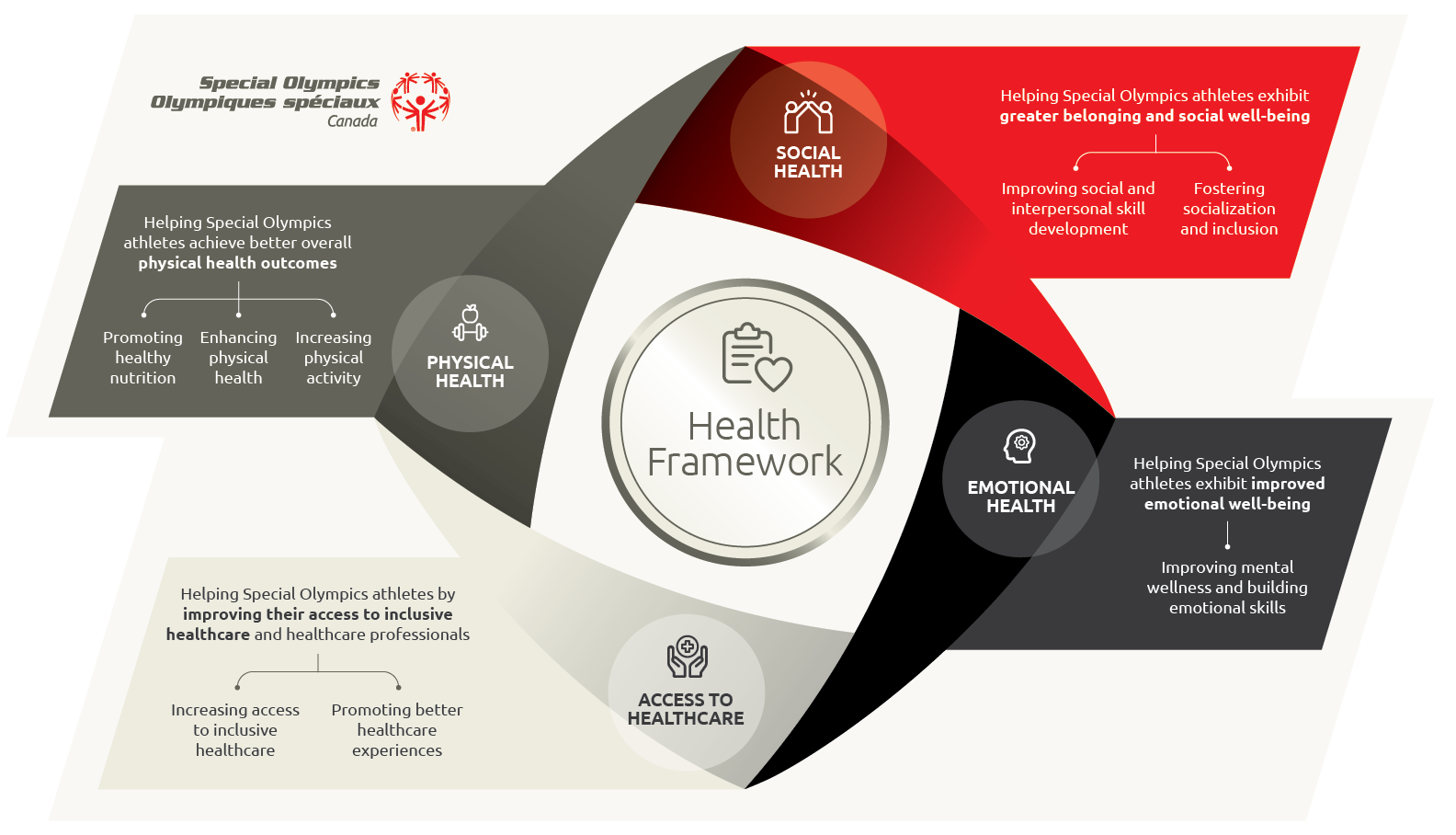
Health Framework
Physical Health
Helping Special Olympics athletes achieve better overall physical health outcomes
Aim: To support Special Olympics athletes in achieving better overall health by focusing on three key priorities: promoting healthy nutrition, increasing physical activity, and improving health outcomes. These priorities work together under the physical health pillar to help athletes reach and maintain optimal well-being.
Nutritional Choices

Provide athletes with foundational nutrition education.
Raise awareness of how healthy eating supports athlete health and well-being.
Empower athletes to make informed nutritional choices that enhance their health and performance.
How?
Nutrition education can be provided to athletes, coaches, volunteers, and caregivers through various approaches, including:
- Host nutrition education sessions.
- Share accessible nutrition resources.
- Encourage discussions about healthy eating during practices and competitions.
Physical Health Outcomes
Manage and improving existing health conditions.
Enhance overall physical fitness.
Equip athletes with resources and support to take charge of their health.
How?
- Support athletes’ physical activity in current sports programs.
- Offer athletes additional fitness-focused opportunities.
- Conduct Healthy Athletes Health Promotion and FUNfitness screenings.
- Encourage athletes to participate in multiple Special Olympics sports programs.
Physical Activity
Educate athletes on physical activity guidelines.
Offer structured physical activity programs (e.g., fitness classes, group exercises).
Empower athletes to make physical activity a regular part of their lives.
How?
- Encourage athletes to participate in multiple sports programs.
- Offer new fitness opportunities, like walking clubs.
- Organize chapter-specific challenges, such as step challenges.
- Share Health Canada’s physical activity guidelines to help athletes meet recommended activity levels.
Social Health
Helping Special Olympics athletes exhibit greater belonging and social well-being
Aim: To support Special Olympics Athletes in achieving better overall social health by focusing on two key priorities: promoting social skill development and fostering socialization and inclusion. These priorities work together under the social health pillar to help athletes build and maintain strong social connections.

Social Skill Development
Support athletes in developing social skills for positive interactions with others.
Help athletes improve interpersonal communication and relationship-building skills.
How?
- Offer health leadership training to athletes.
- Support engagement opportunities, such as involving athletes in active roles on social media.
- Provide opportunities for athletes to participate in campaign initiatives and committees.
- Empower athletes to contribute to various projects.

Socialization and Inclusion
Support athletes in feeling more included in their communities.
Provide athletes with continued opportunities for meaningful socialization.
How?
- Support athletes by offering multiple socialization opportunities through sports.
- Provide athletes with socialization experiences through non-sport events, such as dances and unified activities.
- Organize team activities and youth programs to further foster social connections.
Emotional Health
Helping Special Olympics athletes exhibit improved emotional well-being
Aim: To support Special Olympics athletes in improving their emotional wellness by focusing on two key priorities: enhancing social and interpersonal skills and fostering a sense of inclusion within their communities. These priorities work together under the emotional health pillar to help athletes achieve and maintain optimal emotional well-being.
Emotional Skill Development
Support Special Olympics athletes in improving their emotional wellness.
Enhance athletes’ social and interpersonal skills.
How?
- Support athletes by offering mental health and wellness workshops.
- Provide other program components to support emotional wellness.
- Provide resources, tools, and training to athletes, coaches, volunteers, and caregivers to promote coping strategies, resilience, and overall mental wellness.
Access to Healthcare
Helping Special Olympics athletes by improving their access to inclusive healthcare and healthcare professionals.
Aim: To support Special Olympics athletes in achieving better overall health by focusing on two key priorities: enhancing access to care and improving the healthcare experience. These priorities work together under the Access to Care pillar to help athletes reach and maintain optimal well-being.

Access to Inclusive Healthcare
Support access to healthcare tailored for individuals with intellectual and developmental disabilities.
Enhance existing healthcare access to better meet the specific needs of individuals with intellectual and developmental disabilities.
How?
- Train Clinical Directors to support inclusive healthcare delivery.
- Host Healthy Athletes screenings to identify and address health needs.
- Build inclusive healthcare provider networks.
- Facilitate referrals through the Healthy Athletes program.
- Deliver educational presentations to healthcare students on working with individuals with intellectual and developmental disabilities.
Positive Healthcare Experiences
Train healthcare professionals on best practices for working with individuals with intellectual and developmental disabilities.
Promote more positive interactions and outcomes between athletes and healthcare providers.
How?
- Collaborate with medical colleges to develop curriculum and offer professional learning credits.
- Deliver presentations with athlete-health messengers to educate students on working with individuals with intellectual and developmental disabilities.
- Train volunteers at Healthy Athletes events using the SOI inclusive healthcare training module.
- Support Chapters in advocating for policy change at the provincial/territorial government level.
Special Olympics Canada Health Resources
Special Olympics Canada has worked with experts from across the country to expand athletes, coaches, volunteers, and family's health knowledge and has developed great webinars and resources to support with health literacy for people with IDD. Check out the webinar recordings and resources below.
Physical Health


Social Health
Coming soon!


